
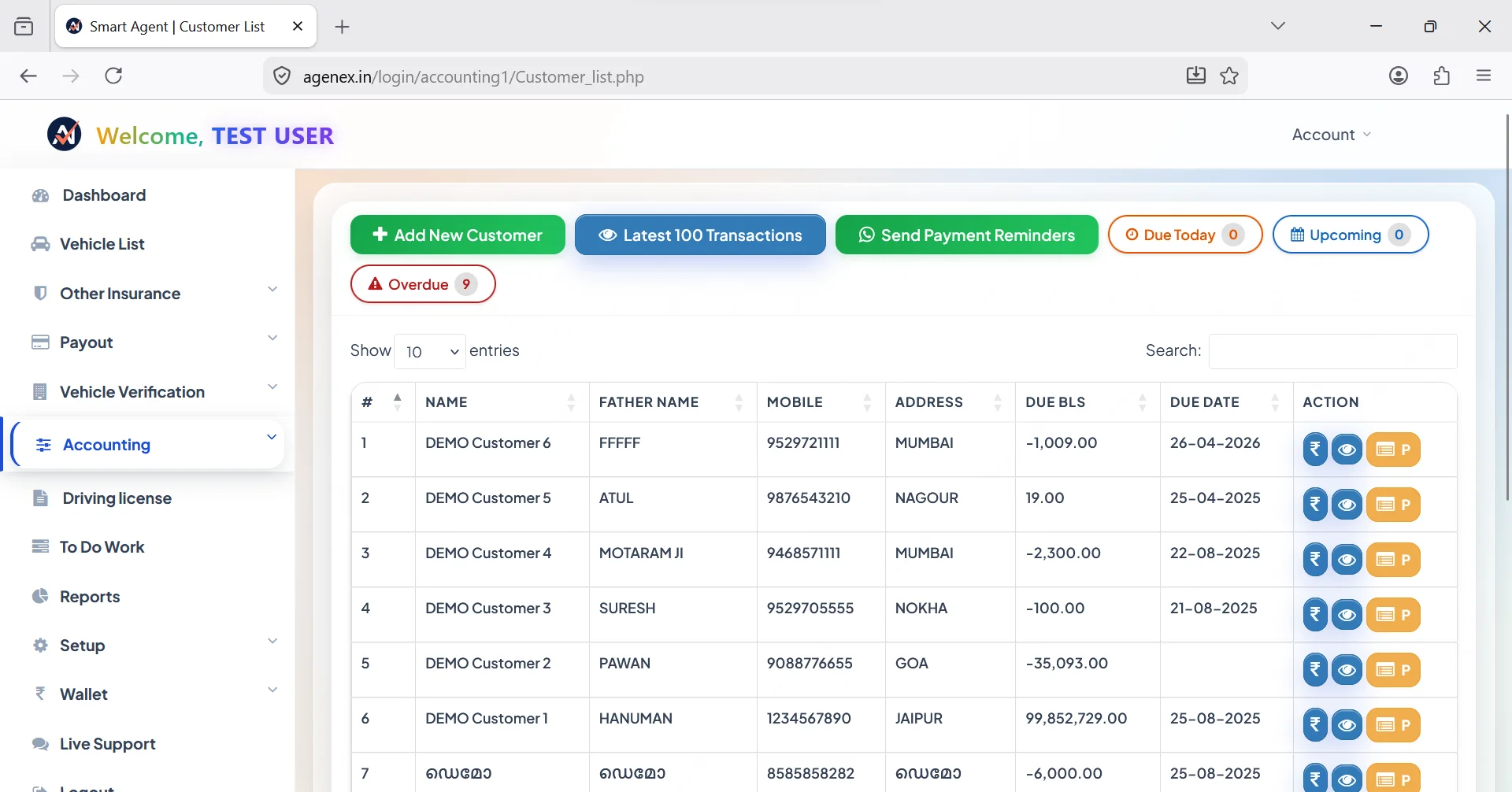
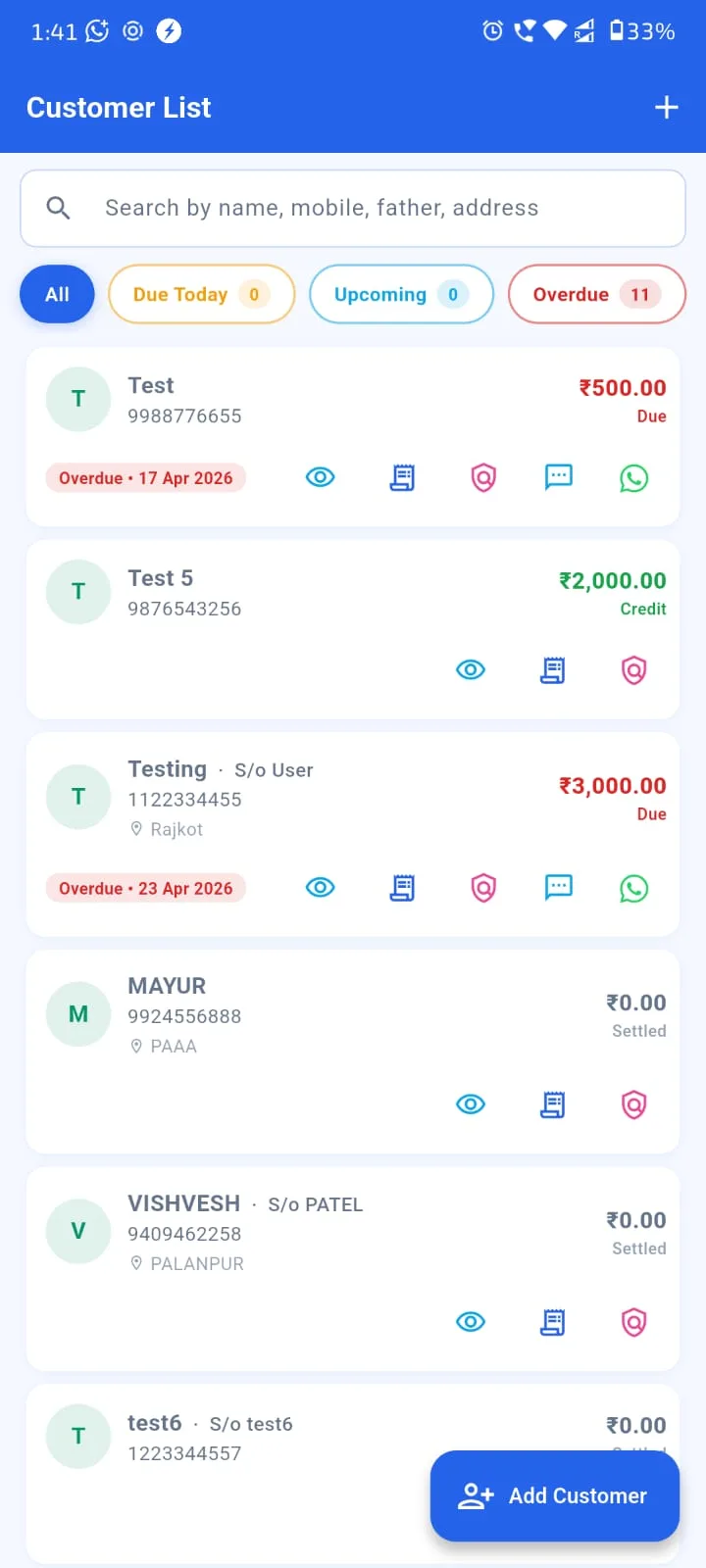
The Indian insurance agent software market has matured significantly. A decade ago, options were limited to clunky desktop tools built for big brokerages. Today, agents can pick from purpose-built mobile-first insurance agent app options designed specifically for the Indian workflow — WhatsApp-first communication, multi-language interfaces, Vahan integration, regional payment modes, and pricing that makes sense for solo agents and small agencies. This guide walks through what to look for, what's realistic at each price point, and how to actually make the switch from your current setup (Excel, paper diary, or older tools) without losing data or momentum.
The single most important shift in 2026 is that insurance agency management software for Indian agents has stopped being a desktop tool that you check at the end of the day. It's a mobile-first tool that lives on your phone, runs your WhatsApp reminders, handles client meetings on the road, and syncs back to your laptop when you sit down. If the software you're evaluating isn't mobile-first, it's already a generation behind.
Feature Checklist — What A Real Indian-Agent CRM Needs
Forget glossy feature lists from foreign vendors. Here's what actually matters for an Indian insurance agent in 2026:
Core CRM: Searchable customer database, family linking, KYC document storage, full policy history per customer. Should handle motor, health, life, general, marine, travel and crop lines together — not just one or two.
Policy management: Multi-insurer support with at least 30 major Indian insurers pre-loaded. Premium frequency tracking (yearly, half-yearly, quarterly, SSS, monthly). Paid-up/lapsed/surrendered status. Nominee mapping. Bulk import from Excel.
WhatsApp automation: Auto-reminders at 30/15/7/1 days before renewal. Birthday and festival greetings. Bulk send capability. 10 Indian languages — Hindi, Tamil, Telugu, Bengali, Gujarati, Marathi, Punjabi, Kannada, Malayalam, English. Per-customer language preference.
Vahan RC + e-Challan check: Pay-per-use vehicle verification at around Rs.5 per check. Owner, engine, chassis, fitness, insurance status, pending challans — all from official source. Essential for motor agents.
Commission engine: Insurer-wise auto-calculation across LIC, Bajaj, HDFC, ICICI, Star, Niva Bupa and others. Sub-agent / POSP split logic. TDS tracking. Monthly statement PDFs. This is what makes a commission reconciliation software useful instead of just being a fancy spreadsheet.
Mobile-first design: Free Mobile app with full feature parity. Works on 2 GB RAM entry-level phones. Smooth on 2G/3G/slow 4G connections in Tier-2 and Tier-3 cities.
Sub-agent / POSP management: Onboarding workflow, role-based access, auto-split commissions, separate ledgers, monthly settlement PDFs. Critical if you're building a network.
Customer self-service portal: Clients log into their own dashboard to see their policies, download copies, see upcoming renewals. Reduces repeat calls to you.
Free agent website: Personal branded mini-site for lead capture, WhatsApp click-to-chat, quote requests. Should be included in subscription — not an extra add-on.
Pricing Benchmarks — What's Reasonable In 2026
Indian insurance agent software pricing has standardized around four tiers, roughly matching agency stage:
- Solo agent starting out (up to 150-200 policies): Rs.800-1,200 per year. Should include basic CRM, WhatsApp automation, mobile app, free agent website. Agenex Silver at Rs.999/year sits in this band.
- Growing agency (200-800 policies): Rs.1,400-1,800 per year. Adds commission engine, sub-agent support, broader insurer coverage, accounting basics.
- Established agency (800-1,500 policies): Rs.2,200-2,800 per year. Adds advanced analytics, premium dashboard, priority support, accounting Pro features.
- Large operations (1,500-3,000+ policies): Rs.3,200-4,000 per year. Multi-branch support, advanced staff management, 24/7 priority support, advanced reports.
Anything significantly above these ranges should justify itself with truly enterprise features (large multi-branch operations, custom integrations, white-label customer portals). Anything significantly below typically lacks one or more must-have features from the checklist above. The best insurance CRM for agents in India hits the sweet spot of full feature coverage at solo-agent pricing — that's what makes Indian-built tools like Agenex very different from foreign-vendor offerings that often cost 5-10x more for the same workflow.
Try Agenex Free
Every Agenex feature is included on a free trial — no credit card required. India's all in one insurance agent app from Rs.999/year onwards.
Start Free TrialIndia-Specific Must-Haves
Indian insurance agents operate under specific conditions that generic foreign CRMs handle poorly. Here's what India-specific software must get right:
Multi-language UI + WhatsApp: If you can't switch the interface to Hindi (or Marathi, Tamil, Telugu, Bengali, Gujarati, Punjabi, Kannada, Malayalam) and send WhatsApp messages to clients in their own language, the software is built for a different market. Indian agents serve clients across language regions — this isn't optional.
Vahan / Parivahan integration: Motor insurance is the volume driver for most Indian agents. RC verification from the official source, e-challan check, fitness and permit validity — all must be integrated. Without Vahan, your motor renewals always carry uncertainty.
INR billing + Indian payment modes: UPI, NEFT, IMPS, cheque, cash — all must be tracked as payment modes. Foreign software often handles only card payments, which doesn't reflect Indian reality.
TDS tracking: Indian insurers deduct TDS at source on commissions. Your software must capture this per policy per insurer and produce year-end summaries that match Form 26AS for your CA. This is purely an Indian tax compliance requirement that international software doesn't bother with.
Tier-2 / Tier-3 network handling: The biggest growth in Indian insurance is happening in Tier-2 cities like Indore, Bhopal, Jaipur, Coimbatore, Patna, Lucknow, Surat and smaller towns. Software must work smoothly on slow networks and entry-level phones — not assume Bangalore-quality 5G or M2 MacBook performance.
How To Switch Without Pain
Most agents put off switching software because they fear losing data or downtime. In practice, switching is much less painful than expected if you follow a clean sequence:
Step 1 — Export your current data: Whatever you're using now (Excel, an old desktop tool, paper diary), export the policy list as CSV. Most agents have this in some Excel form already. If you're entirely paper-based, take photos of each diary page and use an OCR/photo upload feature to digitize.
Step 2 — Use the import wizard: Any good insurance digital assistant app includes a column-mapping import wizard. Drop your CSV in, map columns to fields, click import. Hundreds of records process in minutes. Free assisted migration is typically available for the first 200 policies as part of onboarding.
Step 3 — Set up WhatsApp templates: Configure renewal reminder templates in your preferred languages. Add birthday and festival templates. Activate the 30/15/7/1 day cadence.
Step 4 — Onboard sub-agents (if any): Add each POSP / sub-agent with their commission split. They get their own login. Their existing customers can be assigned to them.
Step 5 — Switch on automation: WhatsApp queue, commission accrual, customer portal, free agent website. Live in 30-45 minutes for solo agents, 2-4 hours for multi-person agencies. Insurance lead manage kaise kare via a proper tool starts the same day.
FAQ
For solo agents handling up to 150-200 policies, Rs.800-1,200 per year is fair. Agenex Silver at Rs.999/year sits in this band with all core features included — CRM, WhatsApp automation, free Mobile app, free agent website, commission tracker.
Yes — the modern ones support 10 Indian languages (Hindi, Tamil, Telugu, Bengali, Marathi, Gujarati, Punjabi, Kannada, Malayalam, English) both in UI and outbound WhatsApp templates. Per-customer language preference handling is standard.
30-45 minutes for solo agents. A few hours for multi-person agencies that need to set up role-based access and sub-agent splits. The longest single step is usually configuring WhatsApp templates the way you want them.
Yes — most reputable Indian-built tools (Agenex included) offer a free trial covering the first 10 policies and 5 RC checks with no credit card required.
Yes — a proper Indian-built insurance agency management software captures TDS deductions per policy per insurer and produces year-end summaries your CA can match against Form 26AS. This is one of the strongest reasons to pick an Indian-built tool over a foreign import.
The good ones are explicitly built for this. Agenex is designed for 2 GB RAM entry-level Android phones and runs smoothly on 2G/3G/slow 4G — this is the actual reality in much of Tier-2 and Tier-3 India.
Yes — Agenex doubles as a PoSP agent registration app companion. POSPs registered through any registered insurance entity can use the same workflow tools for client management, commission tracking and renewal handling.