
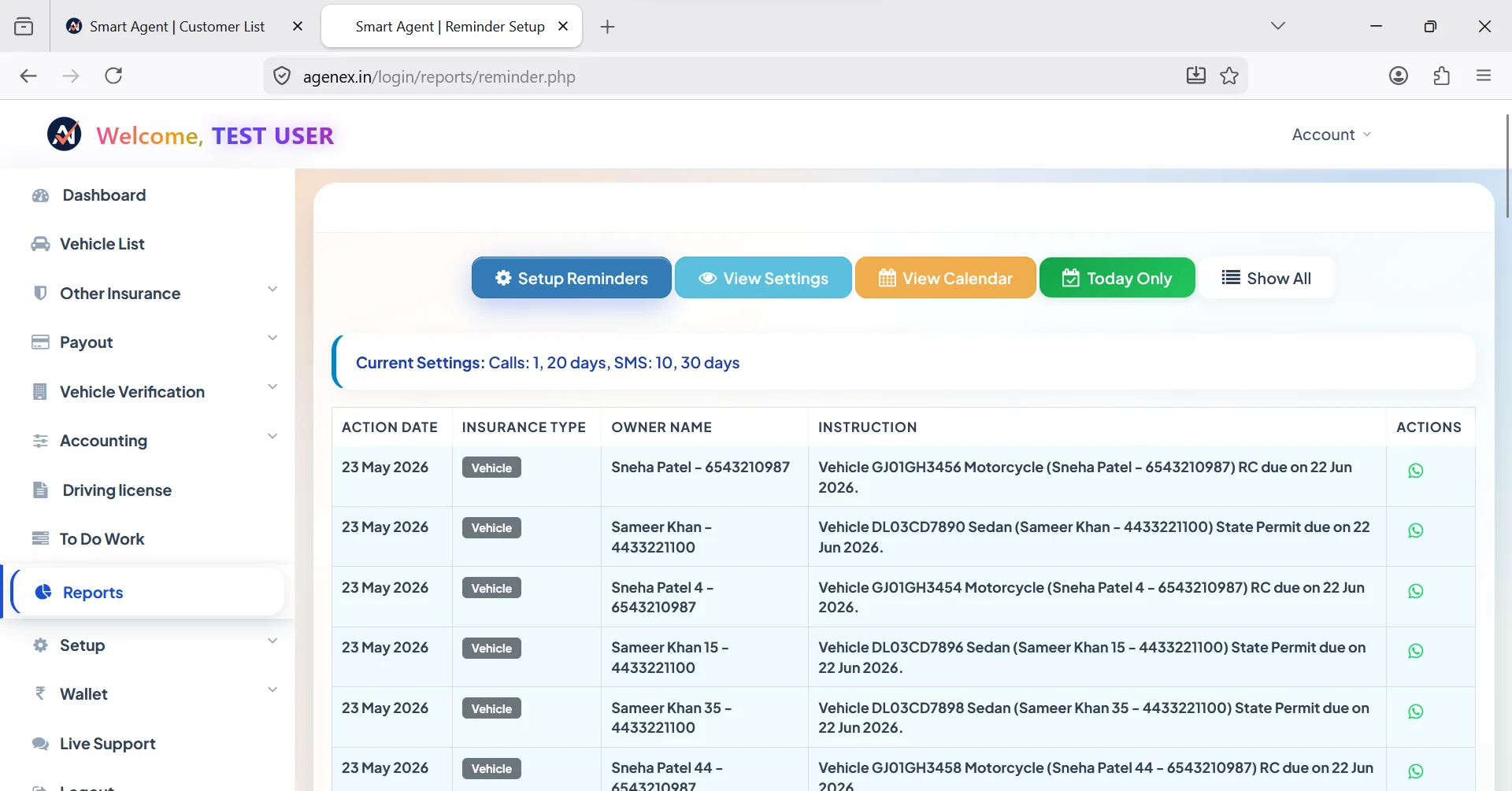
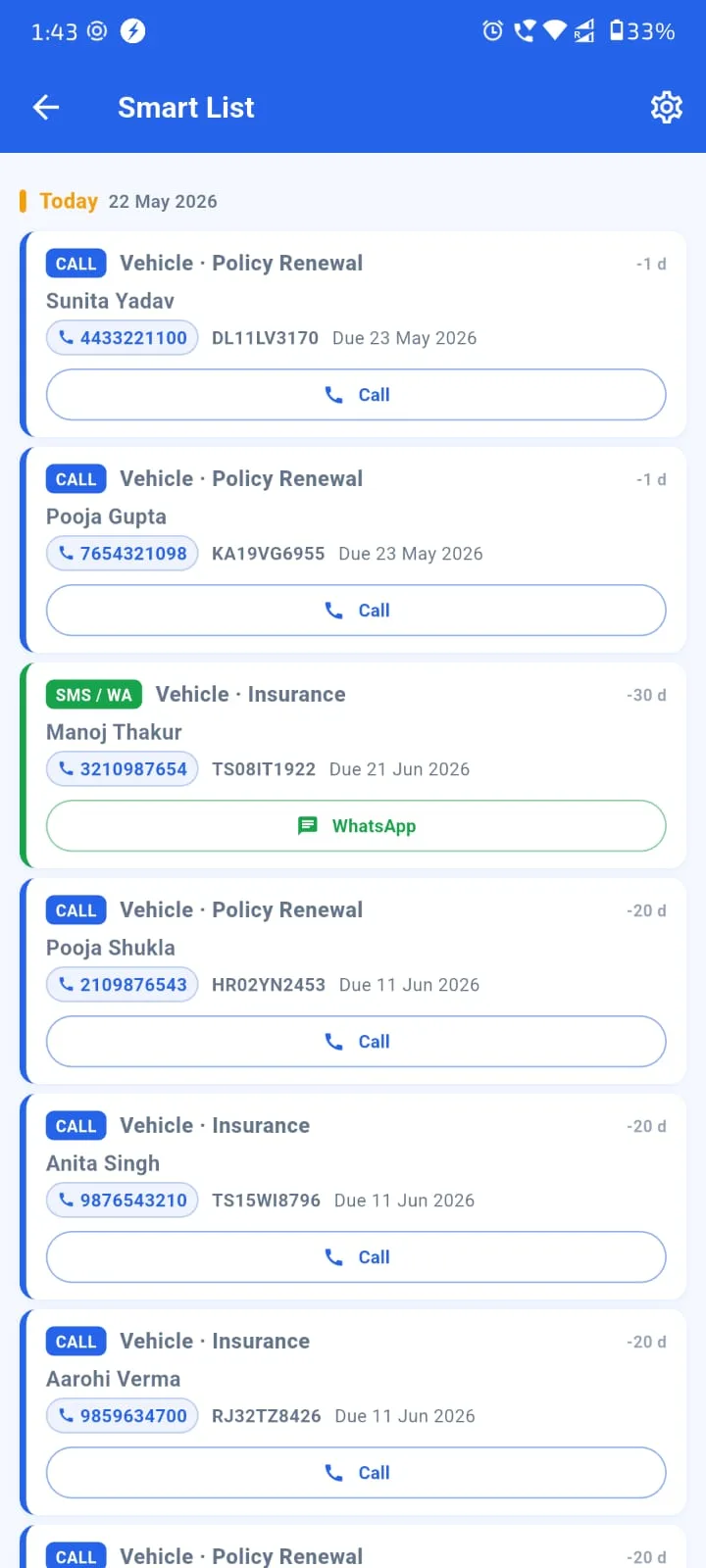
Most Indian insurance agents lose far more leads to follow-up gaps than to better competitors. A prospect who said "send me details, I'll think about it" usually has real interest — they just need consistent, timely nudging to convert. Manual lead tracking via memory and Excel sheets breaks down by the time you're handling 50+ leads a month. A real insurance lead tracking system changes the math entirely — every lead tagged, every follow-up scheduled, every stage transition recorded. This guide walks through what proper lead management software should do for Indian agents, and why ad-hoc lead tracking is the silent reason most agents underperform their potential. Related: Follow-Up Management Software, Insurance Lead Automation, Auto-Dialer Lead Management.
Capture Leads From Every Source
A proper lead pipeline starts with capture. Without structured capture, leads scatter across phone notes, WhatsApp screenshots, walk-in slips and forgotten conversations. A working insurance digital assistant app consolidates all sources into one pipeline:
- Free agent website: Quote forms, contact requests, callback requests from your free agent website auto-land in the lead pipeline tagged by source.
- WhatsApp inbox: Incoming WhatsApp messages from prospects (not existing customers) get tagged as leads automatically.
- Walk-ins: Office visitor logs convert to leads with a quick form entry.
- Referrals: Each referral captured with the referring customer's reference, so you can credit and thank them later.
- Bulk WhatsApp campaigns: Recipients who reply to bulk festival or marketing campaigns get auto-routed into the pipeline as warm leads.
- Dealer / showroom partnerships: If you have car dealer or 2W showroom referral arrangements, those leads track separately by partner name.
- Social media inquiries: Comments, DMs, link clicks from your social posts.
Each lead carries its source tag forever — which becomes critical for ROI analysis later. The agents who track lead source consistently are the ones who eventually know which acquisition channels are profitable and which are wastes of time.
Nurture With Follow-Up Sequences
Captured but un-nurtured leads die. The agents who consistently close 30%+ of leads use structured follow-up sequences rather than relying on memory. A working sequence for new insurance leads might look like:
- Day 0 (instant): Welcome WhatsApp acknowledging the inquiry.
- Day 1: Personalized quote with the specific product discussed.
- Day 3: Educational content addressing a common concern about the product type.
- Day 7: Customer testimonial or before/after comparison.
- Day 14: Closing nudge with payment link.
- Day 21: Final gentle touch before moving to monthly newsletter rotation.
Each message goes out automatically via your customer renewal reminder software in the lead's preferred language. The lead doesn't feel chased; you don't have to remember anything. When they reply, the automation pauses and the conversation routes to your inbox. See Follow-Up Management Software for the full cadence walkthrough.
Try Agenex Free
Every Agenex feature is included on a free trial — no credit card required. The insurance lead tracking system with automated nurture sequences built in.
Start Free TrialTrack Conversion Like A Pro
Every lead in a real best insurance CRM for agents moves through structured stages: New → Contacted → Quoted → Proposal Sent → Closed Won / Closed Lost. Each stage transition is recorded with a date and reason. Closed-lost leads carry a reason tag — "too expensive", "went with another agent", "no longer needed", "no response" — which becomes invaluable data.
Conversion reports break down by source, product, agent (if multi-person agency), and month. You see exactly which sources convert highest, which products you close best on, which months your pipeline runs hottest. Insurance lead manage kaise kare ka real answer is "manage it as a measurable pipeline, not as a memory game" — and only a structured tool can do this.
Source ROI In One Glance
Once leads are tagged by source from day one, the source ROI report writes itself. Over 3-6 months, you'll see: which sources cost you the most time per converted policy, which channels reliably produce hot leads, which partnerships are worth deepening. Most agents are surprised — the source they "feel" works best often isn't the source the data shows works best.
Acting on this data is the real win. If dealer partnerships convert at 30% but Instagram leads convert at 5%, your time should go into dealer relationship deepening, not Instagram content production. Without source ROI tracking, every agent's intuition is biased by their last good lead — which is statistically meaningless. With proper tracking, your channel mix gets better over time, not just stays the same.
FAQ
Free agent website forms, WhatsApp inbox, walk-ins, referrals, bulk WhatsApp campaign replies, dealer/showroom partnerships, social media inquiries — all auto-tagged by source.
Yes — pre-built templates for common lead types (motor, health, life, general) plus full custom drip builder for agencies with specific workflows.
Yes — daily, weekly and monthly conversion reports by source, product line, and agent. Drill-down lets you see exactly which channels are profitable.
Yes — quote requests and contact forms from your free agent website land directly in your lead pipeline tagged with source.
Most agents see meaningful improvement within 60-90 days of switching from ad-hoc tracking to structured pipeline — primarily because no leads fall through the cracks anymore. Exact lift varies by baseline.